
In an innovative classroom, make kinesthetic learning and attention training the daily norm
Designing from inclusion in an innovative classroom—building routines for Special Educational Needs with kinesthetic learning, SEN technology, and short attention-training cycles.
In the quiet clarity of morning, the room is arranged for movement and dialogue rather than rows. This is an inclusive education design from the start: objectives are visible, steps are concrete, and feedback is immediate. Special Educational Needs are not add-ons; they are the first line of planning. Students move in short, predictable cycles that double as attention training, and the structure keeps anxiety low. In this environment, kinesthetic learning is not a novelty; it is the daily grammar of the class.
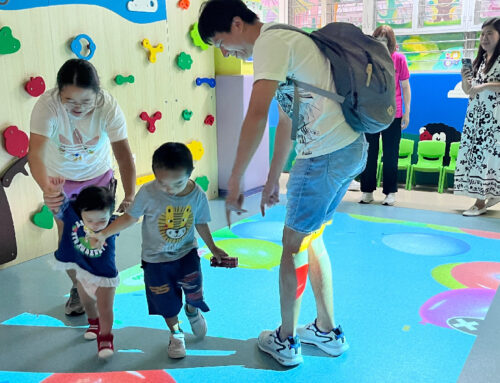
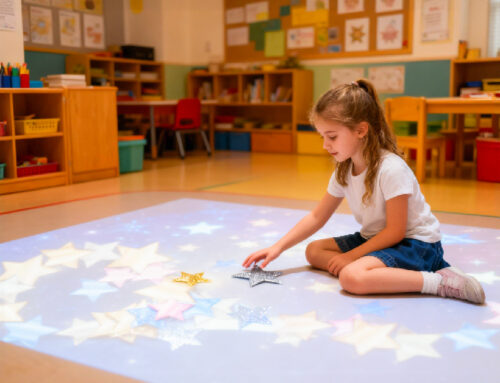
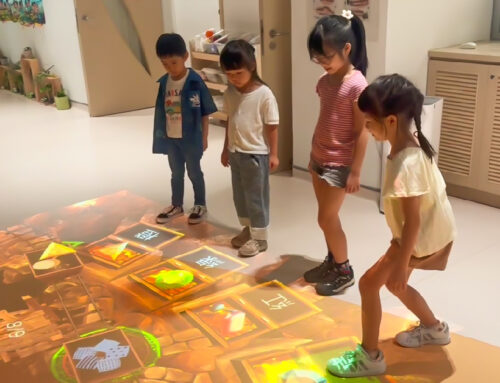
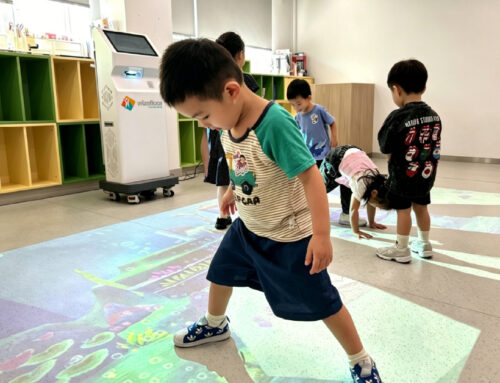
The teacher chooses routines before tools. Each activity has a clear entry, a visible path, and an exit signal. With a calibrated interactive projection floor, choices appear on the ground and students act on them together. Short bursts of educational floor games make concepts tangible; predictable cues help Special Educational Needs learners anticipate the next step. When inclusive education is built into the arc, SEN technology serves clarity instead of spectacle, and kinesthetic learning carries content from station to station.
Design from needs: make difference the starting point
Inclusive education is sustained by design, not by tolerance. The teacher maps cause–effect, sequence, and comparison into visible actions. A calibrated interactive projection floor marks left for cause, right for effect, step back to confirm. Fixed signals lower language load so Special Educational Needs learners feel safe to participate. When visual codes and audio prompts are stable, kinesthetic learning becomes orderly and teachable. With set durations and adjustable difficulty, short cycles of attention training build success. In this way, SEN technology supports flow while educational floor games keep thinking social and concrete.
Three micro-scenes of inclusion
Scene 1: Language precision and courage. Part-of-speech sorting plays out as educational floor games on the interactive projection floor. Peers confirm choices, and the teacher watches for patterns. For Special Educational Needs students, kinesthetic learning turns abstraction into a body path. The predictability of the interactive projection floor reduces anxiety; within inclusive education, small wins accumulate.
Scene 2: Rhythm and sequence for attention. Numbered tiles appear in order. Students move through short cycles; success glows, a miss invites an immediate retry. These five-minute loops function as attention training while maintaining kinesthetic learning momentum. The clarity of SEN technology helps students regulate pace; educational floor games keep the goal collaborative and visible.
Scene 3: Social reasoning with roles. A cooperative puzzle needs a scout, a confirmer, a caller. Rules are transparent and roles rotate, so communication is practiced without pressure. Within inclusive education, kinesthetic learning anchors the task; the interactive projection floor makes strategy visible; Special Educational Needs learners contribute in ways the group can see.
Why it works: structure, rhythm, visibility
• Stable visual codes lower cognitive load; SEN technology increases legibility for Special Educational Needs within inclusive education.
• Short cycles (3–7 minutes) sustain motivation and provide built-in attention training while preserving kinesthetic learning energy.
• Clear paths on an interactive projection floor make decisions explicit; educational floor games keep concepts social and shared.
• Fast transitions and adjustable difficulty reduce management costs so the innovative classroom gains depth without friction.
• Lightweight evidence (observations, exit slips) aligns assessment with inclusive education pacing.
One term, steady change
A pilot class adopted a small set of routines and a reliable interactive projection floor. Lessons were broken into short cycles; reflection followed action. Over the term, more students articulated steps aloud; participation by Special Educational Needs learners increased; and rotation etiquette improved. The shift was not a miracle; it was inclusive education made observable through design, aided by SEN technology and sustained by kinesthetic learning.
Implementation key notes
• Lead with inclusive education: design from needs outward rather than retrofitting later.
• Keep three anchors stable across educational floor games: visual code, audio cue, and roles.
• Use short loops for attention training to protect kinesthetic learning from fatigue.
• Let SEN technology be quiet and reliable; the interactive projection floor should clarify, not distract.
• Collect light evidence often; align it with Special Educational Needs goals.
Quiet tools, clear routines: the path of inclusive education
When respect and clarity meet movement, progress follows. For schools building inclusion into the everyday, humble tools and visible routines matter. Danish-born platforms such as WizeFloor show how an interactive projection floor can stay teacher-friendly while serving Special Educational Needs with care. When SEN technology remains quiet and educational floor games stay purposeful, kinesthetic learning turns classrooms into communities.
FAQs
Prepare Your Students for the Future
Want to explore more about the academic exchange and interactive learning tips? Read our other articles to see how interactive technologies and immersive learning open new possibilities for schools.