
Bringing Learning to Life: How STEAM Transforms Knowledge into Children's Creativity
When knowledge is no longer confined to textbooks, children find their own rhythm through experience.
STEAM education is not just a slogan but a practice that transforms textbook knowledge into creativity through gamified learning and hands-on activities. With interactive floors, projection systems, and innovative classroom design, focus training, cognitive training, and sensory integration happen naturally, making knowledge come alive.
Learning Needs More Vitality
Textbook knowledge is like a map—without walking the path, it feels like flat lines. The value of STEAM lies in making these lines into real routes. When children "learn by doing"—building, experimenting, or engaging with interactive projection floors—knowledge gains vitality.
Gamified learning provides rhythm and structure. Children try, fail, and adjust in movement, finding collaboration as their common rhythm. This vitality is the force that turns knowledge into creativity.
From Knowledge to Creativity
STEAM is not an added subject but a framework linking Science, Technology, Engineering, Arts, and Mathematics. This structure enables sensory integration and reshapes scattered knowledge into a coherent image.
Science: observation leads to hypotheses and focus training.
Technology: interactive floors and projections provide instant feedback, moving learning beyond text.
Engineering: hands-on construction triggers natural cognitive training.
Arts: color, sound, and visuals enrich sensory learning.
Mathematics: from steps and angles to ratios, numbers become visible and tangible in gamified learning.
Turning Floors into Maps: WizeFloor Programming Tasks
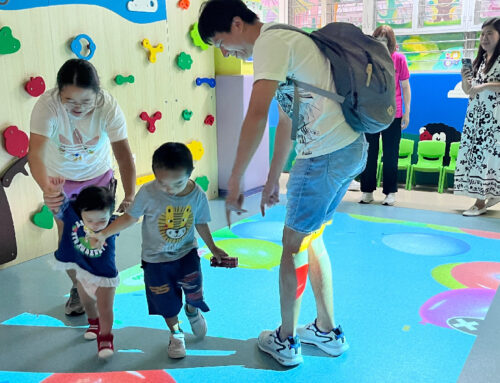
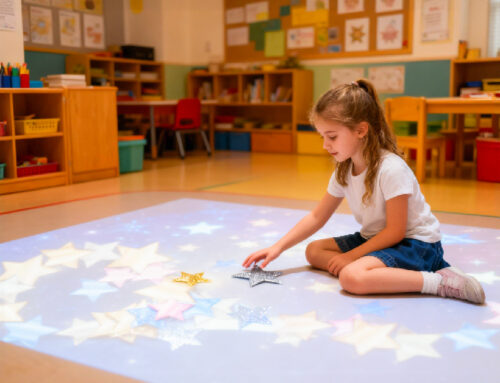
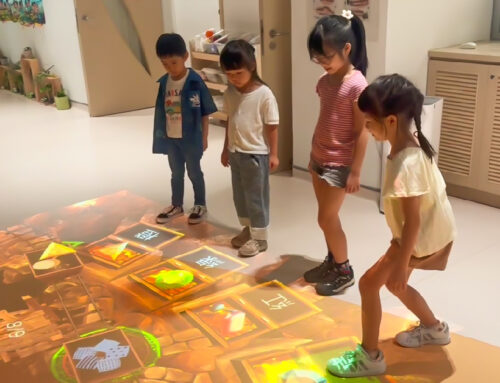
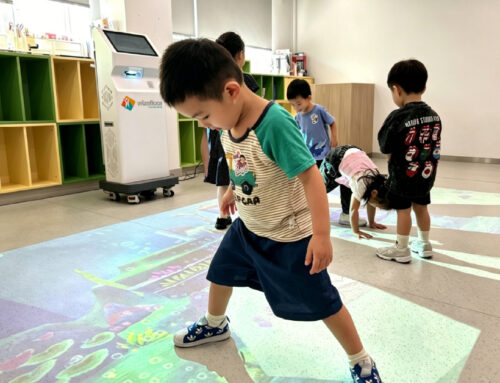
When classroom lights dim, the interactive floor becomes a map. Children plan the best route to reach goals: some test the path, some observe changes, others give verbal guidance.
If a mistake is made, the projection floor uses light to signal adjustments. Students rotate roles—planner, navigator, executor. With repeated attempts, they shorten paths, avoid obstacles, and turn logic into clear movements.
At the finish point, the floor reveals their traced path like a flowchart. These programming tasks transform focus training, cognitive training, and STEAM thinking into tangible experiences. WizeFloor's value lies in turning abstract concepts into interactive, physical learning.
Breaking Myths, Making Ideas Real
Many assume STEAM is just more activities, but its real power lies in structure. Textbooks stop being "answers to memorize" and become "worlds to explore." Interactive projection floors and gamified learning create low-barrier entry points, helping students build confidence through attempts.
Technology does not replace teachers; it provides stable learning environments. WizeFloor makes STEAM tangible, allowing children to explore safely and meaningfully. Time, sound, and difficulty adapt to students' needs, balancing challenge and comfort.
When Knowledge Becomes Creativity
The most moving part of learning is not exams but seeing children's eyes light up in discovery. When STEAM meets gamified learning, knowledge is no longer static text but an energy that can be touched, felt, and created.
WizeFloor transforms this energy into real experiences. Through focus training, cognitive training, and sensory integration, children not only gain skills but confidence. In collaboration and dialogue, they learn resilience and growth. True education does not just transfer knowledge but builds stages for creativity. With STEAM as its framework and WizeFloor as its tool, learning truly shines
FAQs
Prepare Your Students for the Future
Continue exploring the principles of interactive learning with our expert articles on pedagogy and classroom design. Subscribe below for the latest guides and success stories from the WizeFloor community.