
Real Classrooms, Real Results: What WizeFloor Schools Across Asia Are Discovering
The best argument for any classroom tool is not the product specifications or the market research. It is what happens in actual schools, with actual students, in real teaching conditions. WizeFloor's community of partner institutions and educators across Asia is growing, and the patterns emerging from learning environments in Singapore, Taiwan, Hong Kong, the Philippines, and Malaysia are consistent enough to be worth documenting.
This article draws from educator feedback, pilot programme observations, and conversations in the WizeFloor educator community across Asia to describe what real-world adoption looks like, including where it works well, where it takes some adjustment, and what teachers wish they had known at the start.
Early Childhood Settings: The Unexpected Standout
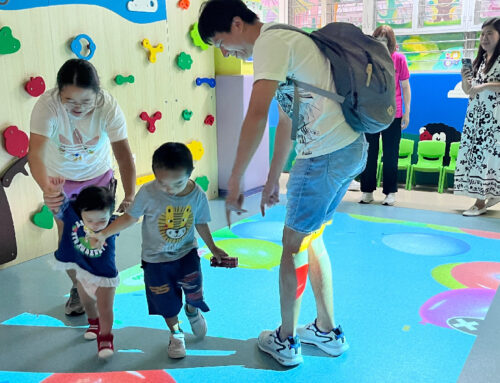
One of the consistent surprises in this technology's Asia deployment has been how effectively it works in early childhood and kindergarten contexts. The expectation going in was that younger students might find the system confusing or overstimulating. The reality in most cases has been the opposite.
Children between the ages of three and six take to interactive floor activities intuitively. There is no interface to learn, no procedure to follow. You walk onto the floor, something projected changes in response to where you are, and you figure it out by doing it. Young children have always learned this way, through physical exploration rather than instruction. Floor sessions in early childhood settings have consistently produced high participation levels, extended attention spans, and, noted by multiple teachers across the region, visible joy in the learning activity.
For kindergartens and preschools evaluating educational technology investments, the early childhood content packs covering early numeracy, letter recognition, social-emotional learning, and motor skill development represent a coherent programme rather than a collection of novelty activities.
Primary Schools: Integration as the Key Variable
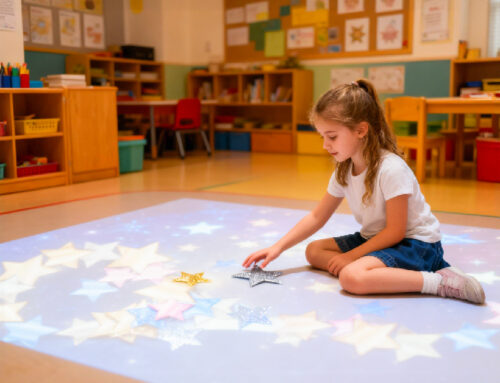
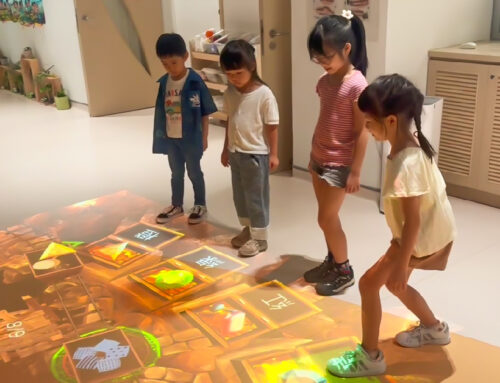
Across primary schools in Singapore and Taiwan, the adoption experience divides into two clear categories: institutions where the system is treated as a supplementary add-on, and those where it is integrated into regular lesson planning as a core curriculum tool. The outcomes differ significantly.
In the add-on category, the technology tends to be used sporadically, during free periods, as a reward activity, or during special events. Students enjoy it, but the learning impact is limited because the activity is not connected to what they are studying. The technology is working. The pedagogy is not.
Schools that integrate WizeFloor into their weekly planning, scheduling floor sessions alongside written work, connecting floor activities to recent lesson content, and using participation data to inform instruction, report stronger academic outcomes and higher teacher satisfaction with the tool. WizeFloor's curriculum team and training programme are explicitly designed to push institutions toward this second pattern.
SEN and Therapy Contexts: Where the Impact Is Most Visible
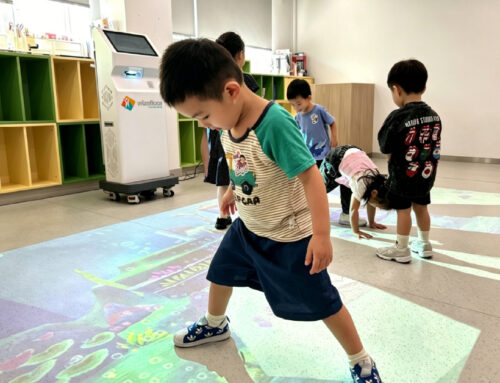
Across both Hong Kong and Singapore, the feedback from specialist centres and therapy programmes has been particularly notable. Children who have not previously engaged with screen-based educational tools, whether because of sensory sensitivities, motor challenges, or difficulties with sustained seated attention, are participating in floor activities with a level of engagement that surprises their educators.
The EdTech Hub's global review of technology for students with special educational needs notes that EdTech remains underutilised for learners with additional needs, particularly in many parts of Asia. The barriers cited include complexity of use, inadequate training, and tools that were not designed with these learner populations in mind. WizeFloor's effectiveness in these contexts is closely related to its design approach, with consideration given from the early stages of development to learners with diverse needs, including those with special educational needs. Its large-scale projection, full-body interaction, minimal reliance on fine motor control, and adaptable content enable it to support a wide range of learners across both educational and therapeutic environments.
The Philippines and Malaysia: Different Markets, Similar Lessons
In the Philippines, the platform's expansion through distribution partnerships is reaching institutions across a wide range of contexts, from urban private schools to rural government settings and specialist centres serving families who previously had no access to interactive learning technology. The offline capability is essential in many of these environments. Facilities in provincial areas cannot depend on consistent internet access, and a technology tool that fails when the connection drops is one that erodes teacher trust quickly.
In Malaysia, the specialist centre and private school market has shown strong early interest in the platform, with the combination of inclusive learning content and portability aligning with the practical constraints of smaller facilities. The ability to move a single unit between therapy rooms and classrooms within the same day addresses a resource management reality that fixed-installation systems cannot.
In both markets, the emerging lesson is familiar. Adoption is fastest when educators have seen the system working with students similar to their own, and when the training and support infrastructure gives them confidence to use it independently. The technology is a starting point. The community around it is what makes the difference long-term.