
Primary One Readiness in Hong Kong: Five Skills to Practise Through Play
A child can recognise many words. Why might Primary One still feel difficult? As a new school year approaches, teachers and parents often ask the same question: is this child ready for Primary One?
Reading, spelling and number work may come to mind first. Yet the school day also asks children to look after their belongings, listen to instructions, wait for a turn, work with classmates and ask for help when they need it.
For K3 children preparing for Primary One, five useful skills are self-care, understanding instructions, cooperation, managing feelings and adapting to changes in routine. Teachers can develop them gradually through play and familiar situations.
The Hong Kong Education Bureau's kindergarten-to-primary transition resources group extended learning activities under self-care, physical, affective and cognitive development. They offer practical ways for children and families to become more familiar with primary school life.
Why readiness extends beyond academic work
Kindergarten and primary school have different surroundings, timetables and classroom expectations. Children also meet new teachers and classmates.
A child who can already read and write may still need time to settle into these changes. Play gives children repeated, manageable chances to listen, communicate, take turns and solve small problems with others. Those experiences are useful when the school day becomes less familiar.
Five skills worth practising in K3
1. Self-care: "Let me try it myself"
Primary school brings more responsibility for a child's own bag, stationery and other belongings.
Try a "pack your school bag" activity. Show picture cards of a water bottle, pencil case, school diary and other items. Give children a simple scenario, then invite them to choose what they need and pack the real objects. The aim is to practise planning, choosing and completing a task independently.
2. Listening and following instructions: one step at a time
Start with a short direction such as, "Find the red picture and put it in the box." Once children are comfortable, add another step.
Colour matching, picture sequencing and movement games let children act on what they have heard. A child who needs more support may benefit from a visual cue, a demonstration and extra time to respond.
3. Taking turns and working together
Small-group work becomes more common in Primary One. Children learn to join in at different speeds, and each needs opportunities to find a role.
Set up a paired matching game or a short team challenge. One child might look for a clue, another make a choice, and a third check the answer. Watch how they wait, share and respond to a classmate's idea as well as whether they finish the task.
4. Managing feelings and asking for help
A new teacher, unfamiliar classmates and different expectations may feel unsettling. Children can practise naming how they feel and deciding whom to approach.
In a role-play called "A day at primary school", ask: What could you do if you cannot find your classroom? Who could help if you do not understand an instruction? What helps you feel calmer when you miss your family? Stories, role-play and picture choices make those responses easier to rehearse before children need them.
5. Moving between activities
A more structured timetable means children will need to recognise when one activity ends and another begins.
Use a visual timetable and a consistent signal before each change. For example, before moving from free play to group time, invite children to put away one set of materials and walk together to the meeting area. A familiar sequence makes the next step easier to anticipate.
A 15-minute transition activity: "My Primary One Day"
A kindergarten class can bring the five skills together in one short group activity.
| Time | Activity | What to observe |
|---|---|---|
| 3 minutes | Explore pictures of a primary school day | Understanding of a new setting |
| 4 minutes | Choose the right items for a school bag | Listening and making choices |
| 4 minutes | Complete a task with a partner | Turn taking and cooperation |
| 2 minutes | Discuss a feelings scenario | Expressing needs and seeking help |
| 2 minutes | Share one thing learnt | Reflection and confidence |
Adjust the pace, instructions and response options to suit the children in the group.
Let play do some of the work
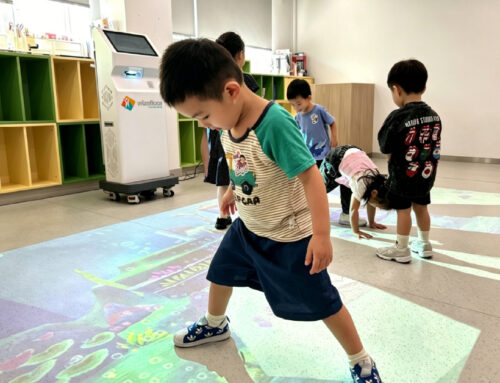
Transition activities need not mean more worksheets. Picture matching, role-play, practical tasks and floor games can all provide opportunities to follow directions, sort objects and cooperate.
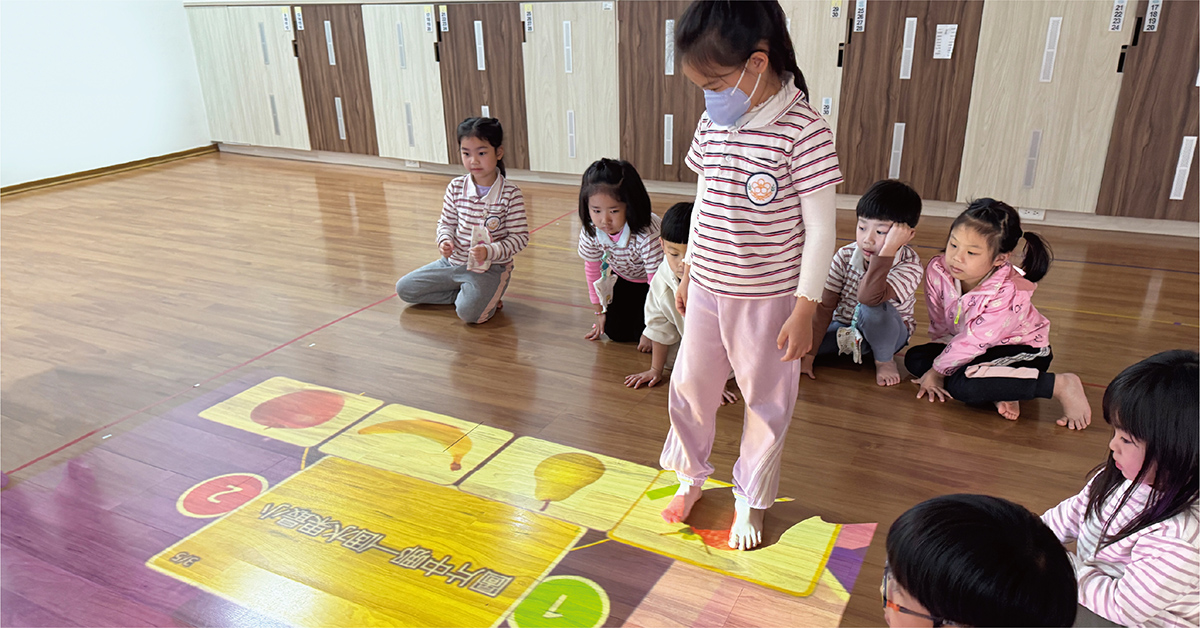
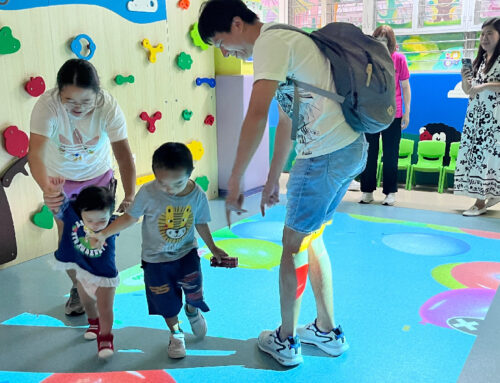
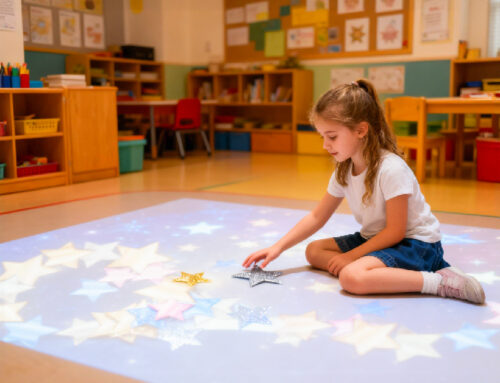
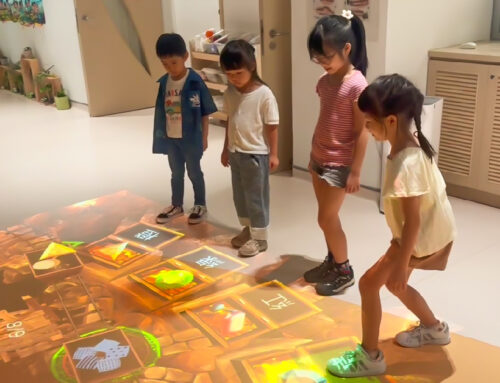
WizeFloor's education applications bring movement and learning activities together. Teachers can adapt games with their own pictures and questions, creating familiar scenarios such as choosing school items or finding a classroom. Children can respond by stepping, pointing, choosing and working together. The Games and Activities page shows other ways the format can be used.
An interactive floor is one teaching tool. Real objects, conversation, role-play and experiences in the child's own school remain valuable parts of preparation.
What should school leaders and teachers look for?
A correct answer tells only part of the story. During an activity, consider whether a child is increasingly willing to try a task independently, can say when help is needed, and is learning to wait and share with others.
Observe these behaviours across different days and activities. One test cannot capture every part of a child's readiness for Primary One.
Confidence grows through everyday practice
Children entering Primary One need knowledge, but also the confidence to meet new people, follow a new routine and learn from a first attempt. When self-care, cooperation and communication become part of everyday play, the transition becomes a gradual process.
Explore more participatory learning
To turn familiar classroom goals into active learning experiences, explore WizeFloor's education applications and the WizeFloor Academy.