
Interactive Technology in Language Education: Beyond Rote Learning
Multilingual learning is no longer a luxury—it is a global necessity. Globalization has made mastering a second or third language essential for future career opportunities. However, the traditional path to fluency is often paved with tedious drills and rote memorization, causing many students to lose motivation before they reach proficiency.
To solve this, educators are turning to interactive technology. By transforming passive drills into active, gamified experiences, we can make foreign language learning not only more effective but genuinely engaging.
The Challenge: Why Traditional Methods Fall Short
For decades, language education relied heavily on repetitive copying, vocabulary lists, and static exams.
Lack of Context: Students learn words in isolation, not in conversation.
Passive Learning: Students sit and listen, rarely using the language as a communication tool.
Low Motivation: The gap between studying and "real life" application feels too wide.
Without an interactive environment, language remains a subject to be studied rather than a skill to be used. To overcome this, we must shift from a passive model to a participatory process.
How Interactive Technology Reshapes Learning
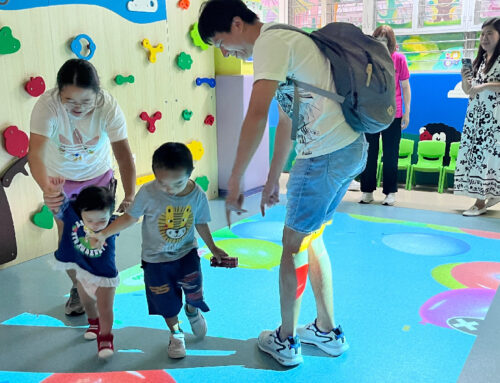
Interactive technology introduces kinesthetic learning—learning by doing—into the language classroom. This shifts students from passive receivers to active participants.
Through platforms like WizeFloor, abstract concepts become physical actions:
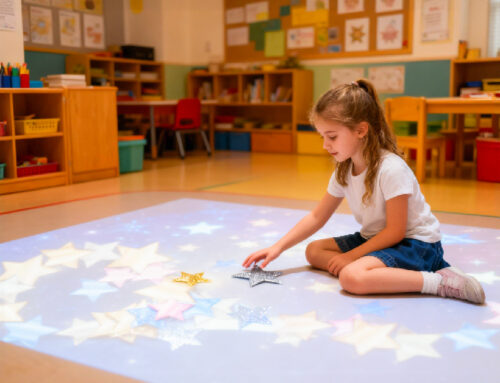
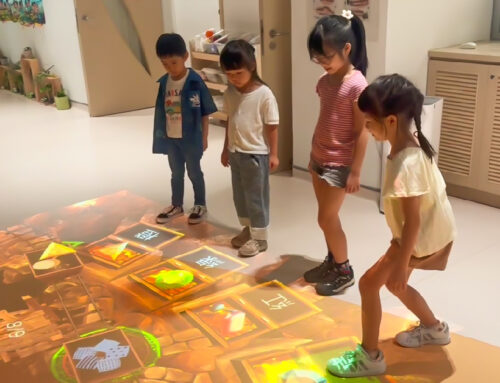
Vocabulary: Memorization turns into matching games where students step on the correct images.
Pronunciation: Practice becomes a group activity where movement triggers audio feedback.
Grammar: Sentence structure exercises transform into dynamic sorting tasks.
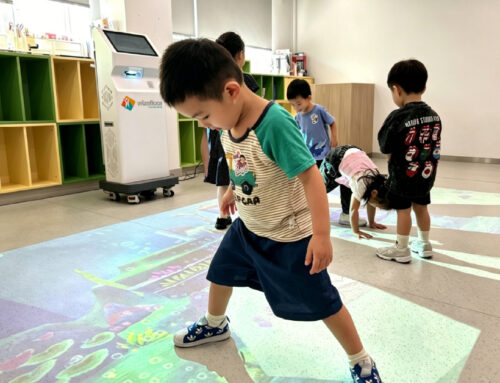
When students move, think, and act simultaneously, they retain information longer. The anxiety of "getting it wrong" is replaced by the fun of the game.
Practical Application: From Textbooks to "Create Your Own"
The true power of modern EdTech lies in student agency. The challenge of language education is making knowledge come alive, and the best way to do that is to let students lead.
WizeFloor's "Create Your Own Content" feature exemplifies this. It allows students to move beyond answering questions to designing them.
Design: Students input their own vocabulary lists and questions.
Create: They record voiceovers and select visuals for the game.
Play: They challenge their peers to solve the puzzles they created.
This process deepens their understanding of the language (as they have to teach it to the game) while enhancing critical soft skills like teamwork, communication, and digital literacy.
Outlook: A Future of Enjoyable, Effective Learning
Language education should no longer remain in the realm of monotonous drills. When students experience language through gamified processes, they naturally treat it as a functional part of their lives rather than a test requirement.
Tools like WizeFloor bridge the gap between abstract grammar rules and physical experience. This approach shows clear advantages, particularly in foreign language learning, where lowering the "affective filter" (anxiety) is crucial for success.
Towards Student-Centered Language Education
Language is not just a tool; it is a carrier of culture and identity. When students actively learn in interactive environments, their perspective shifts from pressure to exploration.
By integrating physical movement, social collaboration, and digital creativity, we are moving toward a future where language learning is immersive and student-centered.
FAQs
Want to learn more about interactive learning and educational innovation?
Read our other articles to explore a new blueprint for the future of education.