
From Reluctant to Ready: How Teachers Across Asia Are Rethinking Student Engagement With WizeFloor
Most teachers do not adopt new classroom technology eagerly. They have watched too many promising tools arrive with enthusiasm and depart with quiet disappointment. The default position, wait and see how it works out for someone else, is entirely rational.
Which is why the accounts coming from educators using this system across Asia are worth documenting. The hesitation at the start is honest. What follows tends to be specific and consistent across very different school contexts and student populations.
The Pattern: Scepticism, Then Surprise
A common theme among teachers who have integrated this system into their regular classroom practice is that their initial reaction was guarded. Interactive floor technology sounds like something designed for exhibition spaces or shopping malls, impressive but not necessarily serious as a teaching tool.
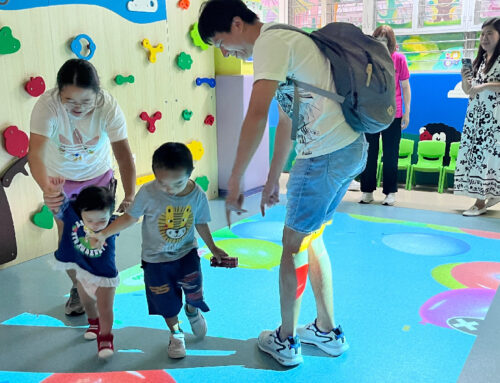
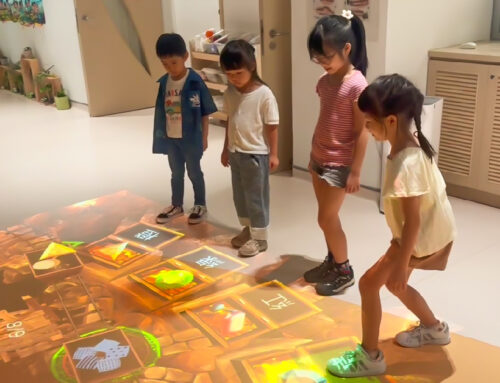
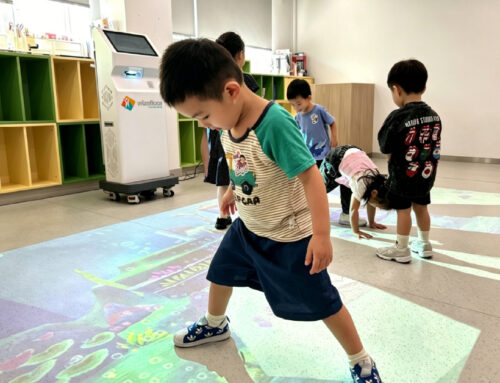
The shift happens when they see it running with their own students. The surprise is not usually about the technology itself. It is about the students: who participates, how quickly, and which students specifically. The children who tend to sit quietly at the back of a traditional lesson often become some of the most engaged participants in a floor session. Movement lowers the stakes. There is no single moment of public commitment the way there is when you raise your hand to answer a question. You simply step somewhere, and the floor responds.
For teachers working with mixed-ability classrooms or with students who have anxiety around academic performance, that change in the texture of participation matters enormously.
What Engagement Actually Looks Like
Research on classroom technology and engagement consistently finds that the metric is difficult to capture precisely. Engagement is not just compliance or physical presence, but active cognitive investment in what is happening. A 2024 study found that students who are physically active and making real choices within a learning activity demonstrate consistently higher levels of sustained attention than those who are sedentary observers.
Educators across Singapore, Taiwan, and the Philippines have reported participation rates in floor activities that substantially exceed those in conventional lesson formats. The figure that appears repeatedly in pilot school feedback is a shift from roughly 30 percent of students actively engaged to upward of 90 percent, not through coercion or competitive pressure, but because the activity design makes it natural to participate rather than natural to disengage.
Engaged students learn more, retain information longer, and develop stronger attitudes toward the subjects they are studying. The implications extend well beyond motivation. Engagement is the prerequisite for every outcome that actually matters in a classroom.
Teachers Who Have Made WizeFloor Their Own
What distinguishes the most effective classrooms is not just the technology but the pedagogical thinking behind its use. Educators who use the platform most effectively treat it as a curriculum tool, not a reward activity. They build floor sessions into their weekly lesson planning, connect activities explicitly to curriculum objectives, and use student response data to inform the following day's instruction.
In Taiwan, teachers working within the Ministry of Education's digital classroom framework have been particularly systematic about this, using the maths and English activities as core lesson components rather than supplementary enrichment. The curriculum alignment with local educational frameworks is direct: activities map to the same objectives educators are already planning toward.
In Singapore, practitioners in both mainstream and specialist contexts have developed rotation models where one group engages with the floor activity while another group works on related written tasks. This allows the technology to serve the whole class rather than a subset. These are pedagogical adaptations that develop through use, and they are the kinds of practices that spread naturally through professional networks.
The Community Dimension
One of WizeFloor's deliberate investments has been in educator community building: a Facebook group for educators across Asia and a LINE circle for the Taiwan market specifically. Neither is a passive product promotion space. Both function as active channels where participants share activity ideas, troubleshoot real classroom challenges, and build on each other's practice.
For educators in markets where adoption is still early, this community provides something important: the ability to learn from those who have already made the mistakes and found the approaches that work. The institutional knowledge that accumulates in a professional community is often more practically useful than any formal training programme, and WizeFloor's investment in that infrastructure reflects an understanding that the platform's value compounds as the educator network around it grows.