
When Coding Becomes a Child's Language of Communication
Coding education is more than learning to program. It nurtures logical thinking, problem-solving skills, and creativity. With gamified learning, interactive floors, and digital tools, children connect abstract logic with concrete creativity.
Coding Education: Building Logical Thinking and Problem-Solving Skills
In today's wave of educational reform, coding education has moved to the center of attention. Its true value lies not only in learning technical skills but also in cultivating logical thinking and problem-solving abilities.
Programming requires children to break down problems into steps, then use structures such as conditions and loops to design solutions. This process strengthens their ability to analyze systematically and to persevere through trial and error. These skills are not only central to academic success but also indispensable in future careers where adaptability and structured thinking are essential.
Thus, coding education becomes more than a technical exercise. It is a form of cognitive training that develops both analytical clarity and resilience in problem-solving, equipping children for a rapidly changing world.
From Action to Thought: The Growth of Logic
Coding represents a journey from concrete action to abstract thought. When children write code, they start with tangible operations—typing commands, moving characters, or building sequences. Through repetition and reflection, these operations are transformed into patterns of logical reasoning.
Conditional statements, loops, and variables are abstract ideas, yet they gradually become mental tools. Children learn to connect concrete steps with abstract rules, building a cognitive bridge that allows them to handle new challenges with greater confidence and flexibility.
Creativity in Action: Coding as a Modern Canvas
Coding is often seen as precise and rigid, but in the classroom it can be a stage for creativity. Children are not merely typing commands; they are constructing their own stories through code. When an animation moves because of correct logic, or when a game succeeds because of clever design, coding becomes a canvas for imagination.
This creative process is no different from art. What makes it unique is that creativity must coexist with logical rules and structure. Within this framework, children discover freedom through discipline, transforming limitations into opportunities for innovation.
A Digital Environment for Coding Education
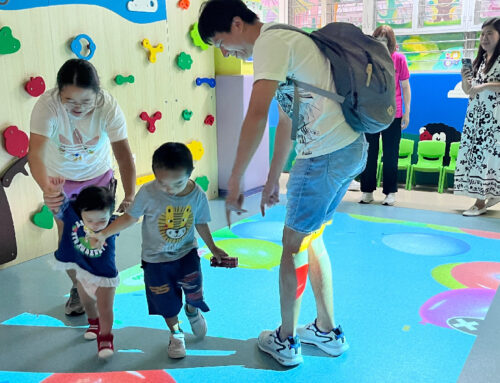
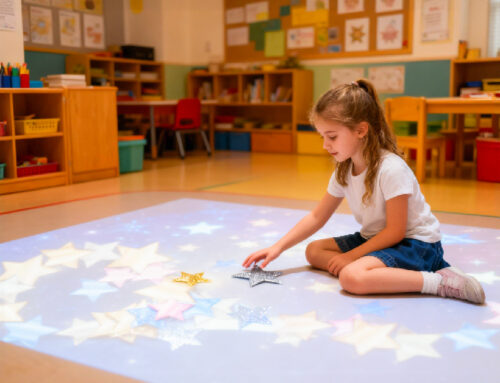
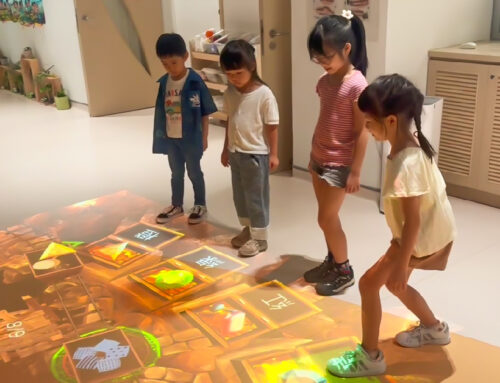
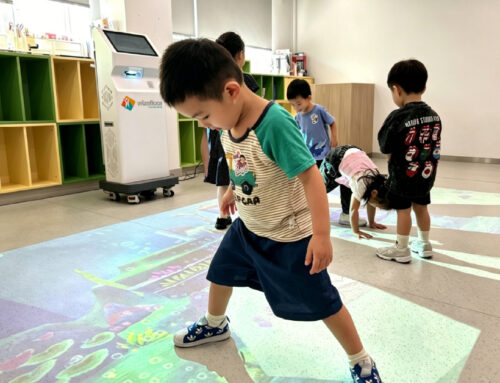
Traditional programming often happens in front of a screen. Digital tools, however, bring new vitality to coding education. Interactive floors and projection-based games transform coding logic into embodied experiences. When children walk along an optimal path to complete a task, the flow of a program becomes a physical journey they can see and feel.
Gamified learning strengthens this experience. Children not only write code but also learn through interaction, collaboration, and constant feedback. Such environments enhance attention and persistence, while expanding coding into a cross-disciplinary method of learning.
How Technology Expands Educational Philosophy
The value of coding education goes beyond code itself. It resonates with educational ideals: self-directed learning, experiential discovery, and collaborative growth. Coding emphasizes autonomy, since every completed program reflects a child's independent thinking. It integrates sensory and motor experiences, because learning is no longer just about text but about thinking, action, and interaction combined. It also fosters community, since programming challenges often require teamwork to solve complex tasks.
Tools such as WizeFloor make these values concrete. Children can design challenges, test logic, and share results with peers. This not only extends the spirit of coding education but also grounds abstract symbols in vivid, interactive environments where learning comes alive.
The Power of Coding Education: Logic and Creativity in Harmony
The power of coding is not about turning children into programmers, but about teaching them how to think and create. When logical thinking meets creative imagination, children gain not only technical skills but also the ability to face future challenges with confidence.
With gamified learning and interactive tools, this power becomes even more tangible. Children learn to break down problems, build frameworks in collaboration, and express themselves through creation. This is the deepest value of coding education: transforming abstract logic into concrete creativity, making learning a true source of inspiration.
FAQs
Prepare Your Students for the Future
Want to explore more about how coding inspires logical and creative thinking? Read our other articles to discover how interactive floors and gamified learning bring coding education to life in today's classrooms.