
The Core Role of Digital Learning in Educational Transformation
Digital learning is no longer just a supplement but the cause of educational transformation. An activity-based interactive learning model, combined with gamified challenges and digital technology, enhances students' focus, collaboration, and creativity, opening new paths for the future of education.
The core of education is not only the transmission of knowledge but also the cultivation of ability. With the spread of technology, digital learning has gradually shifted from a "supporting role" to becoming the driving force of educational reform. From online platforms to multimedia teaching materials, digital technology has indeed allowed classrooms to move beyond blackboards and paper, giving students stimulation through images, sounds, and real-time interaction. However, most digital learning remains screen-based, limited to visual and auditory dimensions, lacking bodily participation. This absence of physical involvement is one of the limitations of current digital learning. Therefore, interactive technologies that integrate movement and experience are increasingly important, enabling learning to go beyond viewing or operating to become a whole-body engagement.
New Classrooms Empowered by Digital Technology
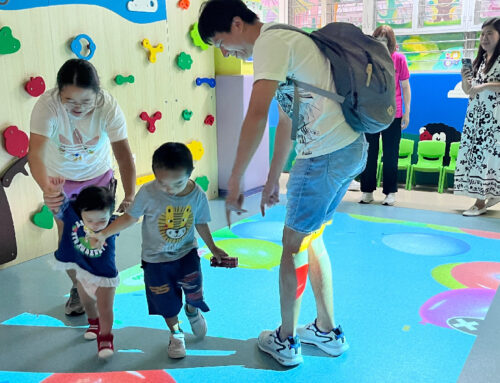
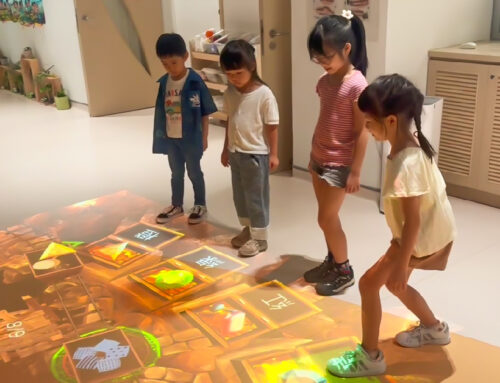
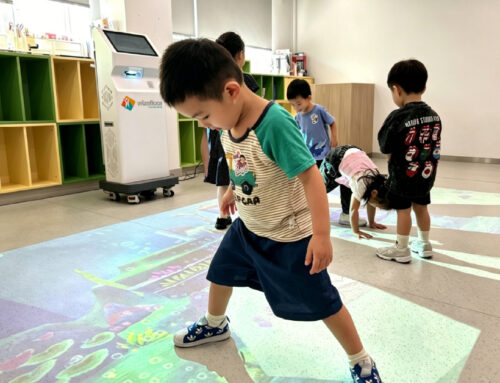
Without activity, genuine interaction is hard to achieve. When students participate in challenges or group collaboration, they need to build connections between actions and responses, which lies at the heart of interactive learning. Gamified learning is a typical example: students engage in challenges that require quick thinking, real-time responses, and collaboration, naturally fostering focus and teamwork. The power of activity lies in transforming abstract knowledge into concrete experience. In an interactive projection environment, students are not only "watching" or "listening" but learning by "doing." This process leaves a lasting impression in the brain, far stronger than passive listening. Moreover, activities also trigger emotional connections. Students feel achievement in completing challenges and learn communication through collaboration. These experiences not only deepen learning but also develop social and problem-solving skills needed in the future.
Practicing Innovative Learning Experiences
When activity-based teaching integrates with digital technology, the classroom becomes an immersive learning environment. Interactive projection games enable students to take on roles and collaborate while solving problems; smart learning platforms can track performance in real time, enabling teachers to provide targeted feedback. Furthermore, some interactive learning systems offer "creative content design" functions, allowing students to set questions, change visuals or sounds, and turn learning into a process of creation. This bottom-up participation makes students not only recipients of learning but also creators of the classroom. The value of the new classroom lies in breaking away from one-way teaching, replacing it with a network of interaction between teachers, students, and technology. Students thus shift from passive listeners to active participants, even designers of the learning process. This transformation marks the true essence of educational reform.
Towards Student-Centered Innovative Education
If educational reform stays at the level of ideas, it is difficult to implement. To make it happen, concrete tools and platforms are essential. The interactive learning system WizeFloor is a case in point. It projects gamified challenges onto the floor, requiring students to use movement and collaboration to complete tasks, naturally developing focus and teamwork. At the same time, it offers creative content design, enabling students to set questions or create visuals, turning learning into creation. This design makes activity-driven interactive learning tangible and ensures that "student-centered" is not just an idea but a daily classroom reality. Through WizeFloor, the blueprint for educational transformation is steadily becoming a reality.
Digital learning has already become both the cause and the means of educational transformation. When activities form the foundation of interaction, classrooms can truly center on students, cultivating essential skills for the future. WizeFloor is a practitioner of this transformation, bringing innovative education from ideas into daily practice.
FAQs
Prepare Your Students for the Future
Want to learn more about educational technology and interactive learning? Visit our other articles to explore new blueprints for the future of education.