
Educational Insights from Rising Self-Awareness
In today's educational environment, students are becoming increasingly self-aware. They are no longer satisfied with just listening and copying notes; instead, they want to take part in shaping their own learning journey. This trend is not only evident in language education but also in math, science, and the arts. Traditional one-way teaching is gradually failing to meet students' needs. They aspire to interactive learning and self-directed learning that connect knowledge with real life.
This trend highlights the need for education to move beyond fixed materials and rigid methods, shifting instead toward flexible and diverse approaches. Whether in vocabulary practice for foreign language learning, inquiry in science experiments, or expression in the arts, students want to be active participants. This is the driving force behind broader educational innovation.
Why One-Way Lectures No Longer Satisfy Students
Although one-way teaching can deliver information, it lacks interaction and practice. In language education, relying solely on copying and memorization often leads to fatigue and reduces motivation. In foreign language learning, it further hinders flexible application. As self-awareness grows, students demand more engagement, prompting educators to rethink how to transform classrooms from teacher-centered to collaborative learning spaces.
How Participation Transforms into Learning Motivation
Student motivation often comes from experiences of participation. When interactive learning is included, students feel like the protagonists of their own education. This sense of involvement transforms into focus and drives continuous exploration in self-directed learning. In foreign language learning especially, when students design their own tasks or games, the results are often more effective and long-lasting.
Innovative Tools Bring New Energy to the Classroom
To truly empower students as drivers of learning, innovative tools are needed. Interactive technology provides the perfect support, turning abstract knowledge into concrete experiences. Vocabulary memorization can become a dynamic matching game; pronunciation practice can integrate creative sound design, transforming it into an engaging challenge. When the classroom becomes a place of creation and experience, participation naturally flourishes.
WizeFloor and the Value of Creative Practice
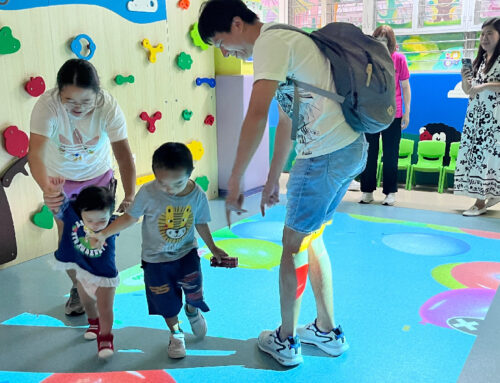
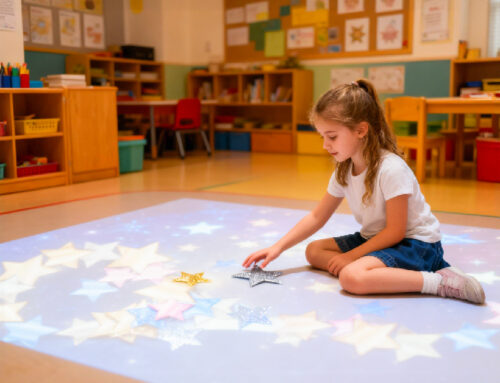
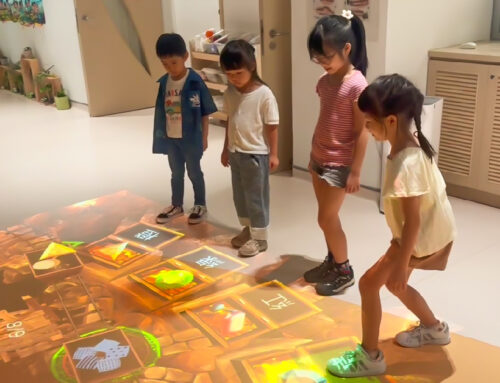
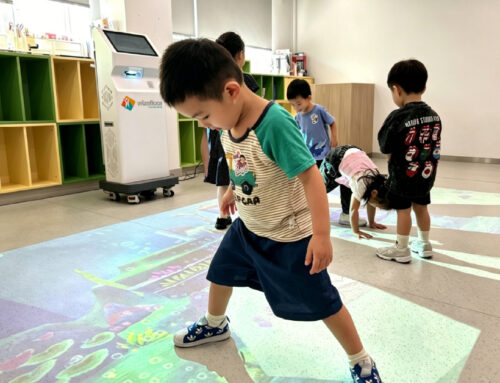
Among innovative tools, the WizeFloor interactive learning system stands out in highlighting student participation. With its creative design features, students can decide gameplay methods, design tasks with questions, set difficulty and timing, and even customize sound and visual effects.
This flexibility transforms students from passive receivers into active creators of their classroom experience. It deepens understanding in language education, strengthens communication through group collaboration, and offers more opportunities in foreign language learning. For teachers, WizeFloor is not only a medium for interactive learning but also a platform that fosters self-awareness and active learning.
Outlook: A Student-Centered Future of Education
As self-awareness continues to grow, education must place greater emphasis on participation and autonomy. The future of language and foreign language learning will no longer be just about transferring knowledge but about creating spaces that combine interaction and self-directed learning.
WizeFloor plays a key role in this transition. It motivates students through creativity and participation, making learning an enjoyable and sustainable journey. This is not only a classroom innovation but a crucial direction for the future of education.
FAQs
Prepare Your Students for the Future
Want to learn more about interactive learning and educational innovation? Visit our other articles to explore a new blueprint for student-centered education.