
WizeFloor Ultra: The Classroom Technology Asia's Schools Have Been Waiting For
Schools across Asia have spent the last decade adding technology to their classrooms. Smart boards. Tablets. Interactive displays. And yet many teachers will tell you the same thing: students still drift. The tools are there. The engagement often is not. WizeFloor Ultra was built with that gap in mind.
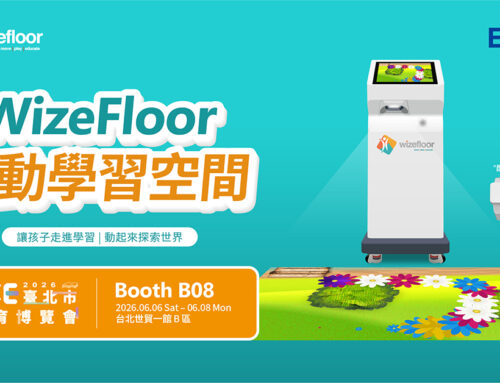
Rather than adding another screen to the room, WizeFloor Ultra turns the classroom floor into a live, motion-responsive learning surface. Students do not watch content. They walk into it, step on answers, and move through problems. The shift from passive observation to physical participation changes the dynamic in a room more quickly than almost any other classroom tool can.
What Sets WizeFloor Ultra Apart
WizeFloor Ultra is an interactive floor system that uses LiDAR technology to project curriculum-based content onto the classroom floor and track student movement in real time. When a student steps on a correct maths answer, the system responds immediately. No hand-raising. No waiting. Just action and feedback happening at the same time.
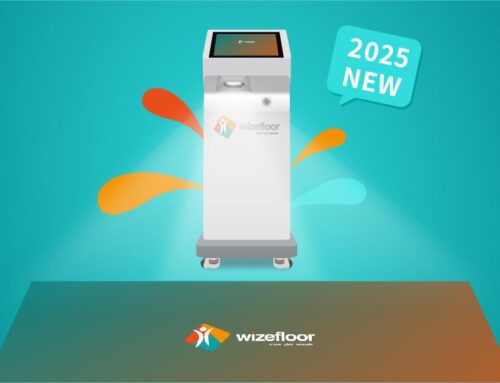
The hardware is CE-certified and built into a single portable unit. There are no separate sensor rigs, no complex wiring, and no dedicated IT room required. A teacher can carry the unit to class, set it up in a few minutes, and begin a lesson. When the session ends, it packs away. In busy schools, where setup time eats directly into teaching time, that level of simplicity is rare and worth taking seriously.
The system also runs entirely offline. For schools in the Philippines, Malaysia, or parts of Taiwan and Hong Kong where internet access is inconsistent or restricted during class hours, this is not a minor detail. It is often the deciding factor.
Designed for Asian Classrooms, Not Just Sold Into Them
Many EdTech products are developed in North America or Europe and then adapted for Asian markets with a translation layer added at the end. WizeFloor takes the opposite approach. The curriculum content packs covering STEAM, Mathematics, English, and Special Educational Needs are built to align with the educational frameworks that teachers in Singapore, Taiwan, Hong Kong, the Philippines, and Malaysia are actually working within.
A maths activity calibrated to US grade-level benchmarks does not serve a Primary 3 teacher in Taipei particularly well. When the content fits the curriculum teachers are actually required to deliver, the platform becomes a practical teaching tool rather than an interesting but peripheral addition to the room.
WizeFloor has also established a partnership with Epson Taiwan, giving educators in Taiwan the opportunity to experience WizeFloor Ultra firsthand in a dedicated showroom environment. For a product where the experience of physically interacting with it is central to understanding its value, that kind of direct encounter accelerates adoption considerably.
Why 2026 Is the Right Moment for This Technology
Singapore's EdTech Masterplan 2030 calls explicitly for learning experiences that are active, physically engaging, and technology-integrated. Taiwan's Ministry of Education digital transformation grants are opening funding pathways for exactly this kind of hardware investment. Across the Philippines, government programmes signal a broader regional willingness to invest seriously in classroom innovation.
The Asia Pacific EdTech market reached USD 59.8 billion in 2024 and is projected to grow substantially over the next decade. The appetite is there. What schools are increasingly looking for is not more technology but better technology. Technology that demonstrably improves what happens in the room when students and teachers are together.
This system is built for that standard. It does not replace the teacher. It gives educators a new kind of tool that converts floor space into curriculum space and converts passive attendance into active participation.
A Practical Note for School Decision-Makers
WizeFloor offers a structured three-tier certification training programme, which means the investment in hardware is accompanied by support that builds teacher capability. Curriculum packs are available as add-ons, and the system's growing content library reflects the subjects and age groups most relevant to K-12 classrooms across the region.
Schools can begin with the base WizeFloor Ultra system and add curriculum packs as needs develop. This purchasing model suits the budget realities of many schools in the region, particularly those working with government procurement timelines.