
How WizeFloor Is Changing the Game for SEN Students in Hong Kong and Singapore
Working with children who have Special Educational Needs requires a different kind of classroom tool. One that adapts to the learner rather than requiring the learner to adapt to it. For many specialist educators in Hong Kong and Singapore, the challenge is not a lack of dedication or expertise. It is finding resources that actually meet students where they are, physically and cognitively, on any given day.
WizeFloor has been making its way into support rooms, therapy spaces, and inclusive classrooms across both cities, and the educators using it are reporting results that are notable not just for their scale but for their specificity. This is not about a piece of technology being vaguely helpful. It is about particular students, in particular situations, engaging in ways they had not managed before.
Why Interactive Floor Technology Fits SEN Contexts
Many children with special educational needs face challenges that conventional classroom technology tends to amplify rather than address. Screen-based tools require sustained visual attention, fine motor control for tapping or swiping, and the capacity to follow a linear seated instruction sequence. For students with ADHD, autism spectrum conditions, physical motor difficulties, or sensory processing differences, these requirements create unnecessary barriers between the child and the learning.
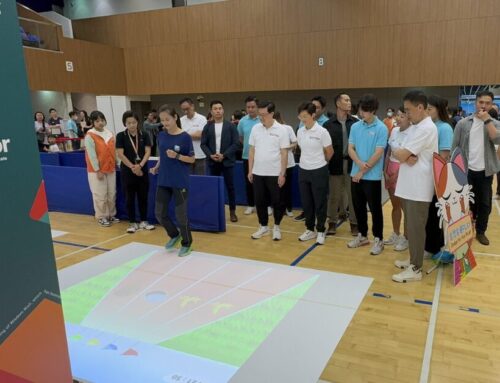
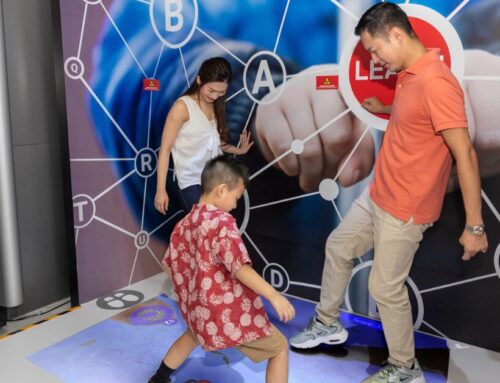
An interactive floor removes many of those barriers in one design decision. The interaction surface is the floor: a large, non-delicate space that can be engaged with feet, hands, or whole-body movement. There is no fragile device to handle carefully, no stylus to coordinate, and no screen to focus on at a fixed distance. These young people can approach the content on their own terms, with the kind of physical engagement that many children with additional needs find regulatory and calming rather than overstimulating.
A 2025 systematic review published in Frontiers in Education examined the utility of assistive technologies for students with special educational needs and disabilities, and found consistent evidence that varied sensory and physical input modes improve learning outcomes and participation for children with diverse needs. Interactive floor technology represents exactly this kind of multimodal input design, engaging visual, proprioceptive, and body-based channels simultaneously.
Sensory Pathways and Regulatory Activities
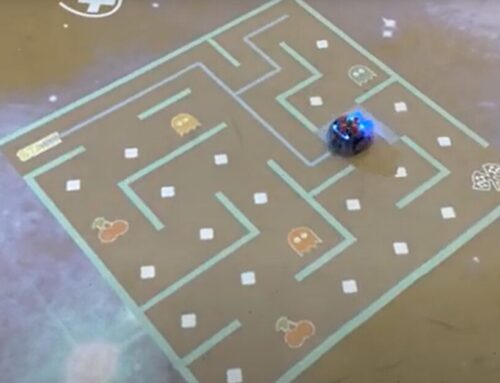
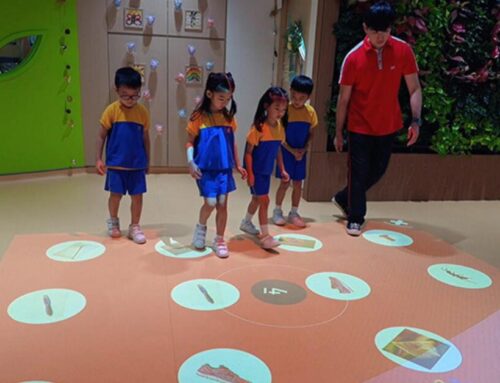
In Hong Kong, specialist centres have been using WizeFloor to build structured pathway activities, projected sequences of movements that students follow to help regulate their nervous systems before or between academic activities. For children with sensory processing disorder or autism spectrum conditions, structured movement sequences serve a similar function to a physical sensory path, but with the added dimensions of visual engagement and adaptable content.
The ability to adjust the projected content without rearranging physical equipment is significant in therapy contexts. A therapist can change the sequence, the pace, the visual complexity, and the type of physical response required without leaving the room or setting up new materials. This responsiveness to individual learner needs in real time is something that fixed physical installations cannot offer.
Emotional Regulation and Social Connection
Several educators working with children on the autism spectrum have noted WizeFloor's value for social skill building. Collaborative floor activities require students to take turns, read and respond to each other's movements, communicate about shared tasks, and manage the minor frustrations of group decision-making. These are not trivial learning objectives for this learner group. They are central therapy goals.
The floor creates a shared neutral space. There is no my device and your device. There is one shared activity that both students are navigating together. For children who find peer interaction difficult or anxiety-provoking, the presence of a shared task that directs attention to the floor rather than to each other can reduce the social pressure enough to make real interaction possible.
Singapore's Inclusive Education Context
Singapore's special education landscape includes both dedicated special schools and inclusion support within mainstream settings. The Ministry of Education's approach increasingly emphasises meaningful participation in shared learning environments, which requires tools that accommodate a range of needs within the same classroom space.
WizeFloor's capacity to run the same hardware with different content, from mainstream curriculum activities to specialist therapy modules, makes it a practical investment for schools managing both mainstream and inclusion contexts. A single unit can serve a Year 4 STEAM lesson in the morning and a small-group regulation activity in the afternoon without any hardware change.
A 2024 report on provision for children with additional needs noted that the majority of teachers believe the current education system does not effectively support these students in their aspirations. WizeFloor does not resolve the systemic issues that underlie that finding. In the classroom, however, it gives educators one more tool that demonstrably works for the range of learners in front of them.
FAQs
Reference
A Systematic Review of the Utility of Assistive Technologies for SEND Students (Frontiers in Education, 2025)
Top 5 Innovative Design Features Transforming SEN Schools in 2024 (Innova Care Concepts, 2024)
Navigating the Challenges of SEN Provision: A Call to Action in 2024 (Teaching Personnel, 2024)